Body Modification Tokio Butterfly ((exclusive))
You’re in a Shibuya capsule hotel, 3 AM. Rain against acrylic walls. Across from you sits a woman with gold seams spiraling up her neck. She hasn’t spoken in an hour. Suddenly, her seams glow deep amber. She whispers: “I’m sorry. I can’t remember my daughter’s name. But I just saw a butterfly in my dream, and it had her face.”
: The movement explores the tension between traditional beauty and radical alterations. This contrast challenges observers to reconsider standard definitions of physical appearance and the boundaries of artistic expression on the human form.
The concept of "Tokyo Butterfly" in body modification generally refers to two distinct realms: the biological study of wing pattern modifications in Japanese butterflies and the cultural presence of butterfly imagery within Tokyo's extreme body modification subcultures. Biological "Body Modification": Butterfly Wing Patterns
Engaging with radical body modification involves a careful balance of artistic expression and physical safety. Because procedures like deep subdermal placement or heavy scarification carry inherent biological risks, understanding the necessary safety protocols is a vital part of the process. Modification Type Typical Healing Timeline Primary Risk Factor Standard Maintenance 1 to 3 Months Anchor rejection Saline irrigation, avoiding friction Subdermal Implants 3 to 6 Months Tissue migration / Infection Compression wrapping, sterile site protection Surgical Scarification 6 to 12 Months Keloiding / Hypertrophic scarring Managed moisture levels, irritation control body modification tokio butterfly
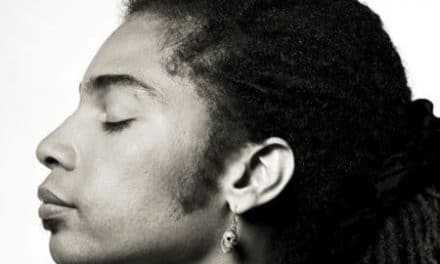
Tokio Butterfly stands as a prominent figure in the ongoing dialogue between traditional human biology and the desire for self-directed evolution. Her dedication to a unique aesthetic vision has made her a central subject for those interested in the boundaries of contemporary body art and the cultural shifts surrounding extreme self-expression.
Maybe "Tokio Butterfly" is a misspelling of "Tokyo Butterfly" and refers to a specific body modification trend in Tokyo, like "bagelhead" or "saline inflation". The search result 9 mentions "bagelhead" and "Keroppy Maeda". Perhaps "Tokio Butterfly" is a nickname for Keroppy Maeda or Lukas Zpira. I recall that Lukas Zpira is a well-known body modification artist. I'll search for "Lukas Zpira Tokyo Butterfly". is promising. The search results show a documentary called "Like A Butterfly" featuring Lukas Zpira, who is a body modification artist. The user might be referring to "Tokio Butterfly" as a misspelling or a variation of "Tokyo Butterfly" or "Like A Butterfly". It could be that "Tokio Butterfly" is a name used by Lukas Zpira or associated with him. I'll open the Wikipedia page for Lukas Zpira.rolling., the search results also mention "Like A Butterfly" documentary. I'll open that.rolling.rolling., I also see a result for "Lukas Zpira either coined or brought to the mainstream the terms 'body hacking,' 'body hacktivism,' 'no body is perfect,' and 'like a butterfly.'" This is interesting. The phrase "like a butterfly" is associated with Lukas Zpira. The user might be referring to "Tokio Butterfly" as a variation of "Tokyo Butterfly" or "Like A Butterfly". Perhaps "Tokio Butterfly" is a misspelling of "Tokyo Butterfly", which might be a reference to the documentary "Like A Butterfly" set in Tokyo. Or it could be a stage name used by Lukas Zpira or someone else.
#TokioButterfly #BodyModification #Metamorphosis #ModLife #SelfExpression #TokyoAesthetic You’re in a Shibuya capsule hotel, 3 AM
But what exactly does it mean? Is it a specific procedure? A particular artist? Or a broader subculture that has taken root in Tokyo’s underground scene?
Listening tips
"You do not become a butterfly by staying in the cocoon," says a renowned anonymous mod artist in Shinjuku. "We cut the cocoon open ourselves. That pain is the genesis of beauty." She hasn’t spoken in an hour
Weaknesses
The evolution of the body over years of procedures is seen as a long-term artistic project rather than a single event. Impact on the Subculture