 The EUREQA dataset
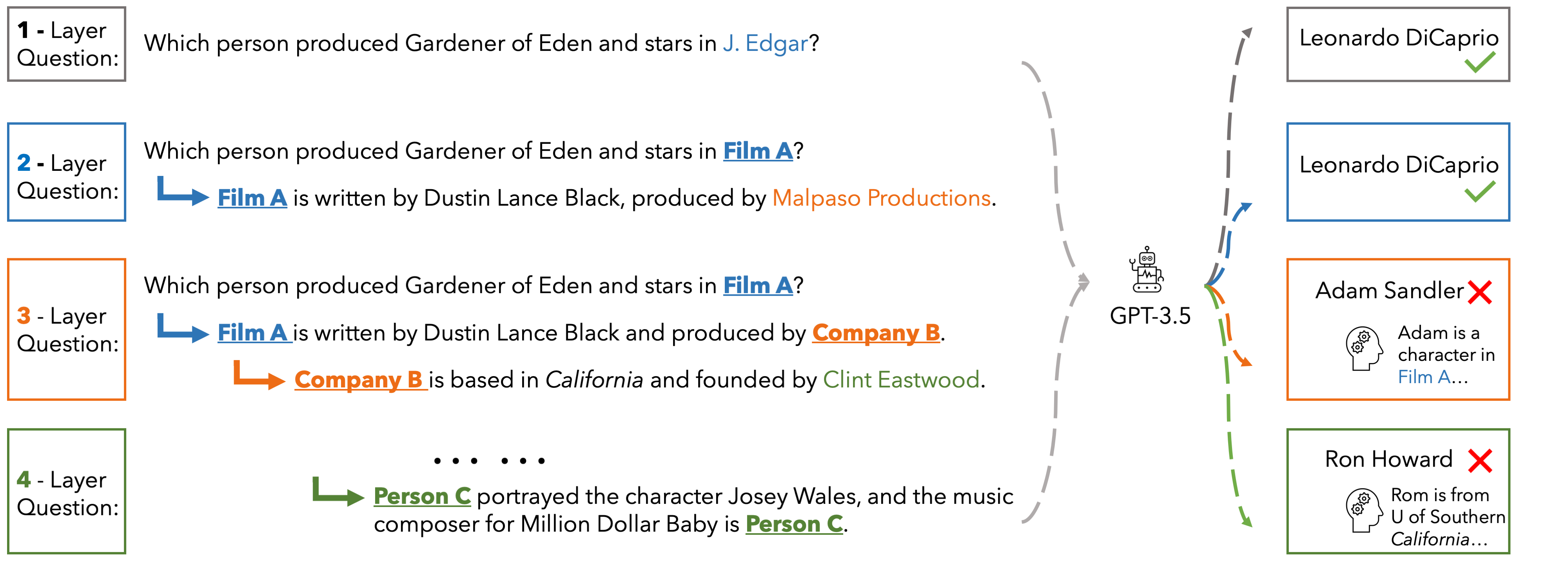
In EUREQA, every question is constructed through an implicit reasoning chain. The chain is constructed by parsing DBPedia. Each layer comprises three components: an entity, a fact about the entity, and a relation between the entity
and its counterpart from the next layer. The layers stack up to create chains with different depths of reasoning. We verbalize reasoning chains into natural sentences and anonymize the entity of each layer to create the question.
Questions can be solved layer by layer and each layer is guaranteed a unique answer. EUREQA is not a knowledge game: we adopt a knowledge filtering process that ensures that most LLMs have sufficient world knowledge to answer our questions.
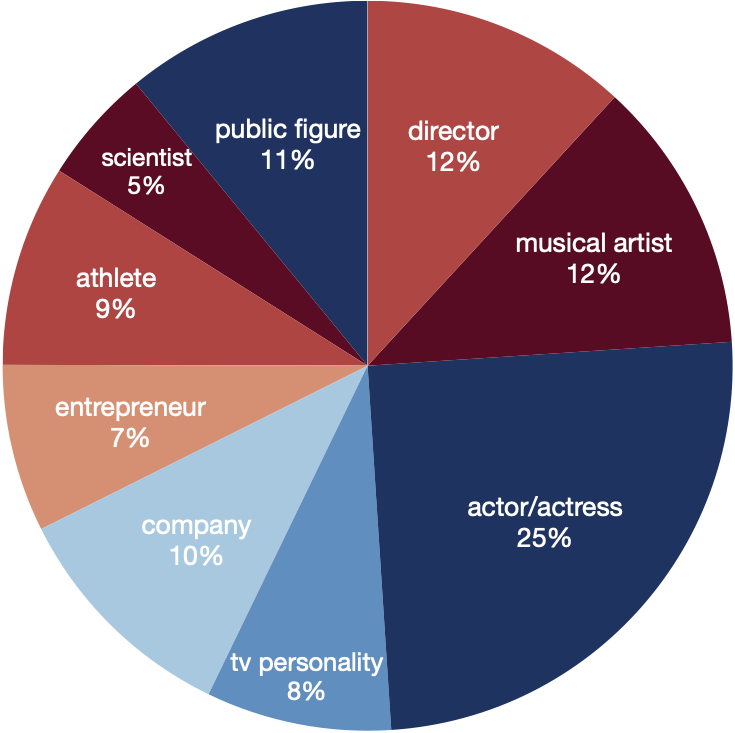
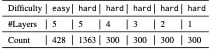
EUREQA comprises a total of 2,991 questions of different reasoning depths and difficulties. The entities encompass a broad spectrum of topics, effectively reducing any potential bias arising from specific entity categories.
These data are great for analyzing the reasoning processes of LLMs
 Performance
Here we present the accuracy of ChatGPT, Gemini-Pro and GPT-4 on the hard set of EUREQA across different depths d of reasoning (number of layers in the questions). We evaluate two prompt strategies: direct zero-shot prompt and ICL with two examples. In general, with the entities recursively substituted by the descriptions of reasoning chaining layers, and therefore eliminating surface-level semantic cues, these models generate more incorrect answers. When the reasoning depth increases from one to five on hard questions, there is a notable decline in performance for all models. This finding underscores the significant impact that semantic shortcuts have on the accuracy of responses, and it also indicates that GPT-4 is considerably more capable of identifying and taking advantage of these shortcuts.
| depth | d=1 | d=2 | d=3 | d=4 | d=5 | |||||
| direct | icl | direct | icl | direct | icl | direct | icl | direct | icl | |
| ChatGPT | 22.3 | 53.3 | 7.0 | 40.0 | 5.0 | 39.2 | 3.7 | 39.3 | 7.2 | 39.0 |
| Gemini-Pro | 45.0 | 49.3 | 29.5 | 23.5 | 27.3 | 28.6 | 25.7 | 24.3 | 17.2 | 21.5 |
| GPT-4 | 60.3 | 76.0 | 50.0 | 63.7 | 51.3 | 61.7 | 52.7 | 63.7 | 46.9 | 61.9 |
This article explores the key features, topics covered, and why this textbook remains an essential resource, along with information on finding the book.
For those seeking to own a copy, there are several excellent, legal, and often affordable alternatives to illegal downloads. These options ensure you get a high-quality, complete, and legal version of the textbook.
Let me know which area of construction you are currently focusing on! Share public link
: Includes 575 questions at chapter ends, tailored for degree, diploma, and competitive exams like GATE, IES, and UPSC . This article explores the key features, topics covered,
: Includes numerous 2D and 3D diagrams to help students visualize complex structural concepts.
: Detailed analysis of cement, concrete, steel, timber, and building finishes. Services & Insulation
I can break down the specific engineering concepts you need right here. Share public link Let me know which area of construction you
Dhanpat Rai Publications prints cost-effective student editions. Investing in a physical copy provides a reliable, lifelong reference tool for your professional engineering career.
Print this sheet, keep it on your study desk, and refer to it when solving numerical problems.
Guidance on construction management, valuation, and the selection of heavy machinery for earthwork and material handling. How to Access Legally : Detailed analysis of cement, concrete, steel, timber,
Most engineering colleges and technical universities maintain multiple physical copies and digital licenses of this text. Check your university’s online library catalog (OPAC) or institutional repository to see if an e-book version is available for remote login. 2. Digital Rental Platforms
The enduring popularity of Arora and Bindra's textbook lies in its comprehensive scope and clear, pedagogical approach. Civil engineering curricula at top institutes—including the IITs, NITs, and various state technical universities—frequently list this book as a core reference. Key subjects covered thoroughly in the textbook include:
This website is adapted from Nerfies, UniversalNER and LLaVA, licensed under a Creative Commons Attribution-ShareAlike 4.0 International License. We thank the LLaMA team for giving us access to their models.
Usage and License Notices: The data abd code is intended and licensed for research use only. They are also restricted to uses that follow the license agreement of LLaMA, ChatGPT, and the original dataset used in the benchmark. The dataset is CC BY NC 4.0 (allowing only non-commercial use) and models trained using the dataset should not be used outside of research purposes.