|
| ||
ELECTRONICS COURSE THE SCHMITT TRIGGER Page 49  INDEX
INDEX
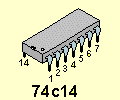
One of the most universal chips
is the Hex Schmitt Trigger, known
as the 74C14. It is also marketed as 40106, 40014, and 74HC14. These are CMOS chips and are characterised by low current consumption, high input
impedance and a supply voltage from 5v to 15v. (Do not substitute 7414 or
74LS14. They are TTL chips and operate on 4.5v to 5.5v and have low impedance
inputs.)
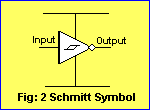
Fig: 2 shows the symbol for a single input Schmitt Trigger Inverter with power rails:
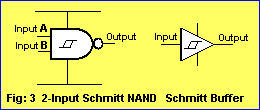
Fig 3 shows the Schmitt Trigger characteristic incorporated into other gates:
We will concentrate on the single-input Schmitt Trigger gate as
contained in the 74c14 IC.
The
output is HIGH until the input rises to 66% of rail voltage.
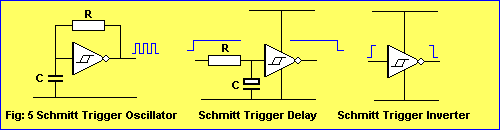
A Schmitt Trigger gate can be wired as an oscillator, delay, inverter (and
other functions, depending on the surrounding components).
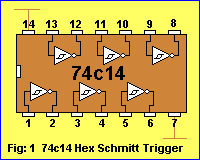
Each of the 6 gates in the 74c14 can
be used to create a separate "building block" and this
gives the chip a wide range of capabilities. 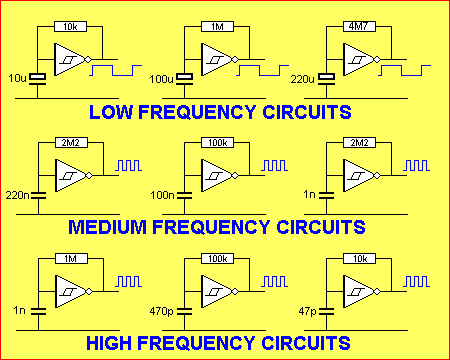 Fig: 6 Low, Medium and High frequency Schmitt Trigger Oscillators Hellboy 2 The Golden Army 720p Brrip Dualaudio Endhindi Updated FileThis comprehensive guide explores the enduring legacy of the film, the technical specifications of a premium 720p BRRip, and why the dual-audio format is highly sought after by global audiences. The Legacy of Hellboy II: The Golden Army Guillermo del Toro's represents a high-water mark for dark fantasy cinema. Released in 2008, this sequel expanded significantly on the 2004 original, trading the gritty, gothic sci-fi of the first film for a lavish, folklore-driven mythos. For enthusiasts seeking the definitive viewing experience, tracking down the optimized 720p BRRip dual-audio (English-Hindi) updated edition offers the perfect balance of visual fidelity, audio flexibility, and modern file optimization. This public link is valid for 7 days and shares a thread, including any personal information you added. This link or copies made by others cannot be deleted. If you share with third parties, their policies apply. Can’t copy the link right now. Try again later. This comprehensive guide explores the enduring legacy of The story picks up after the first film. An ancient truce between the human world and the magical "invisible realm" is broken by Prince Nuada (Luke Goss), a bitter elf who seeks to reclaim the Earth for his people. His plan involves awakening the , a mechanized, unstoppable force of 4,900 warrior gods created to destroy all of humanity. Standing in his way is the Bureau for Paranormal Research and Defense (B.P.R.D.), led by its most unorthodox agent: Hellboy (Ron Perlman). If you are watching using the Hindi dub, try using a decent pair of headphones or a dedicated soundbar. Del Toro’s films rely heavily on subtle ambient background noises (like the ticking gears of the Golden Army) which can get lost on weak laptop speakers. If you share with third parties, their policies apply Modern BRRips preserve multi-channel audio tracks (such as AC3 or AAC 5.1 surrounding sound), ensuring that the explosive battle sequences and Danny Elfman’s sweeping musical score sound incredible on home theater systems. Cinematic Highlights to Look Out For in 720p HD A 720p video file plays flawlessly on older laptops, tablets, budget smartphones, and standard LED TVs without stuttering or overheating your device. The Power of Dual-Audio (English + Hindi) MX Player handles dual-audio formats beautifully. If you are watching on a phone or tablet, MX Player handles dual-audio formats beautifully. Tap the music note icon on the upper screen to toggle between languages. It also allows you to fetch online subtitles automatically if the file lacks them. Safe Practices for Streaming and Downloading : High-quality physical copies (1080p and 4K) are available at retailers like Amazon India . These often include Dual Audio (English and other languages) and extensive special features like the "Director's Notebook". Movie Specifications Director : Guillermo del Toro : This means the video file contains two separate audio tracks. For this specific search, it indicates the file includes both the original English audio and a dubbed Hindi audio track, allowing viewers to toggle between languages in their media player.
The voltage and current (called the "supply") for the 6 gates in a 74c14 comes from pin 14. The ground
pin for the chip is pin 7. Each gate on a circuit
diagram is normally shown without the power rails. It is understood they are present. 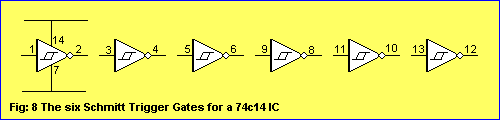
HOW A GATE WORKS 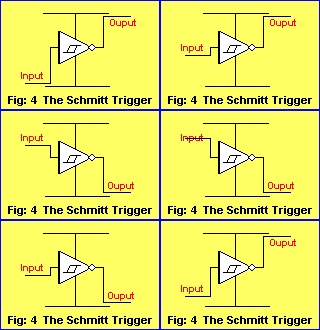
The output of a Schmitt Trigger gate is the opposite of the input. When the input is LOW,
the output is HIGH.
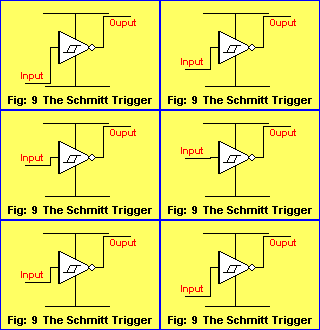
Fig: 9 shows a voltage being applied to the Schmitt gate. The voltage is 55% of rail and this is not sufficient to change the output:
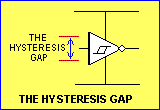
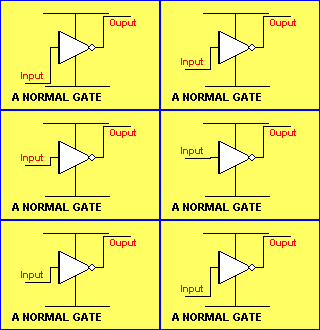
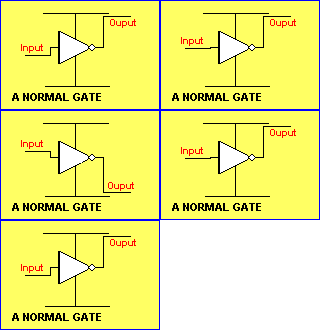
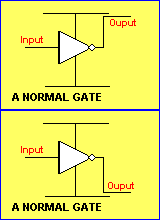
The following figure shows a normal gates. It changes when the input rises above about 53% of rail voltage and changes back when the input falls below 47%. The following diagram shows the very small gap for a normal chip, where the output jumps from HIGH-to-LOW in an uncontrolled manner: Here's the secret of a Schmitt gate: Any noise (up to 60%) entering a Schmitt Trigger will not alter the condition of the gate. Any noise up to 55% entering a normal gate will change the output:
There is one other problem with a normal gate. When the input is in the range of about 47%
to 53%,
the output goes high/low very rapidly. This is called the INTERMEDIATE ZONE
and the output does not know if it should be HIGH or LOW. 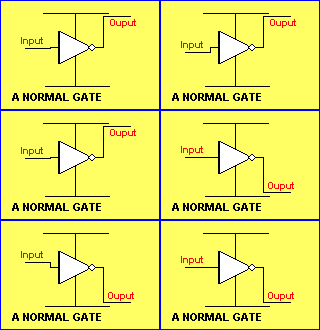 Even a fixed voltage in the intermediate zone will cause the output to fluctuate:
This is due to the
high gain of the amplifier in the gate and it does not know if the output
should be high or low. It is essential for the input voltage to pass
through this zone
very quickly to prevent the gate "oscillating." Fig: 12 shows how a Schmitt gate can be considered to be similar to a common-emitter NPN transistor: 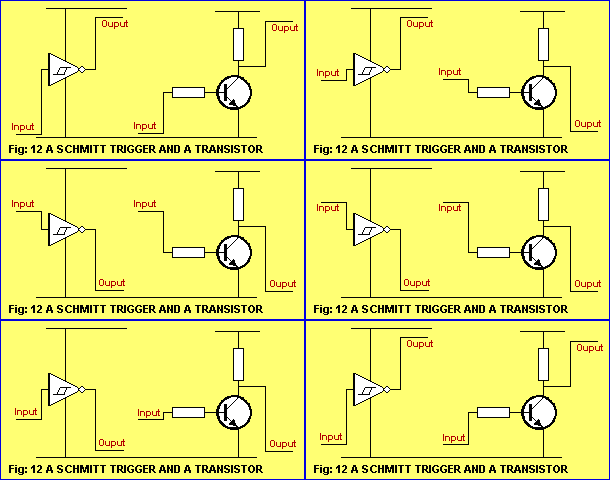
The similarity is only approximate and you can see the general operation of each circuit has some similarities. It is important to note that the two circuits cannot be interchanged without modifying the surrounding components. SWITCH
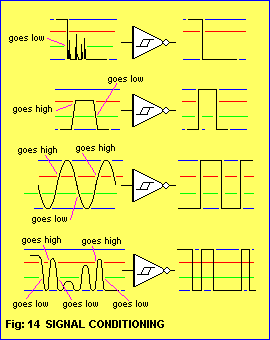
DEBOUNCE 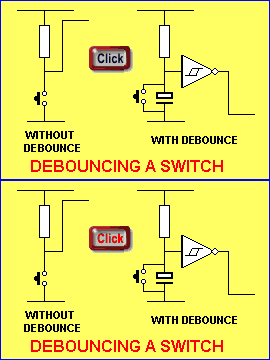 Mouseover to see switch action SIGNAL CONDITIONING
SWITCHING
THRESHOLD
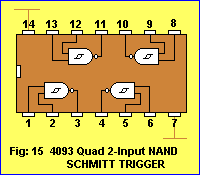
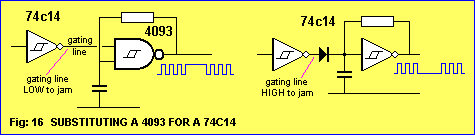
The CD 4093 is sometimes used for its gating capability. One of the inputs of
the gate can used to turn the gate on and off. This is called GATING.
This feature can be
achieved with a single-input
Schmitt Trigger with a diode.
This allows the 74c14 IC to be used.
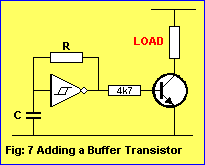
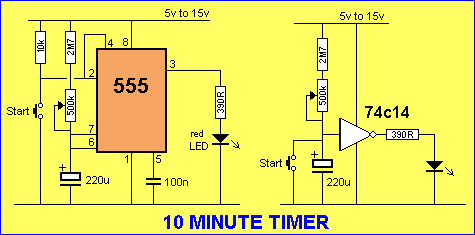 The 555 replaced by a Schmitt gate and a transistor to provide the drive-current: 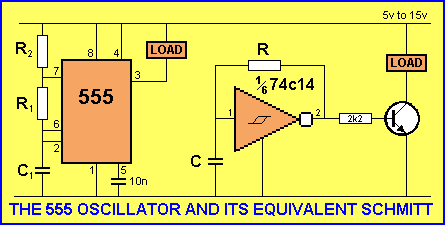
| ||