About the Project
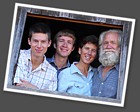
Our family's effort to support the tradition of communal music began in 2001… Read our story »
Get in touch, stay in touch
Copyright © 2003–2015 The Abbott Family
leaned on idyllic resolutions, contemporary cinema (and even modern animated features) often leaves the "blend" as a work in progress. These stories acknowledge that a blended family isn't a replacement for what was lost, but a complex addition that requires constant communication and patience.
Cinema has moved past the need to present the "perfect" family. By embracing the friction, the compromises, and the unique triumphs of the blended household, modern filmmakers have unlocked a richer, more honest form of storytelling. These films remind us that a family is not defined strictly by blood, but by the shared commitment to show up for one another, day after day, amidst the beautiful mess of modern life.
Recent films and television series have tackled the intricacies of blended family life, providing audiences with relatable and often heartwarming portrayals. Movies like (1995), "Cheaper by the Dozen" (2003), and "Enchanted" (2007) showcase the challenges and benefits of blending families. More contemporary films, such as "Instant Family" (2018) and "The Family Stone" (2005), offer realistic and humorous depictions of blended family life. SlutStepMom 19 02 22 Alex Coal And Reagan Foxx ...
The blended family—formed when one or both partners bring children from a previous relationship into a new household—has become a staple of modern cinema. Unlike the idealized nuclear families of mid-20th-century film, contemporary movies portray stepfamilies as complex, often messy, and emotionally fraught systems. Modern filmmakers use blended family dynamics to explore themes of loyalty, loss, identity, and the very definition of kinship. These stories resonate because they reflect real-world demographic shifts: rising divorce rates, late marriages, co-parenting arrangements, and LGBTQ+ families.
Historically, cinema relegated step-parents to two extremes: the abusive, fairy-tale villain (the wicked stepmother) or the goofy, over-eager outsider trying too hard to fit in. Today, directors use the blended family framework to explore themes of grief, identity, boundaries, and chosen love, proving that blood ties are no longer a prerequisite for profound cinematic drama. The Evolution from Tropes to Realism leaned on idyllic resolutions, contemporary cinema (and even
Cinematic portrayals are more than just entertainment; they serve as a form of for families that do not fit the traditional "Hallmark" mold.
Similarly, Instant Family (2018), starring Mark Wahlberg and Rose Byrne, pivots completely away from the "bad foster parent" narrative. Based on a true story, the film follows a couple who adopt three siblings. The conflict isn't about a stepparent imposing tyranny; it's about incompetence. The humor derives from the parents’ desperate attempts to connect, their failures in discipline, and the raw terror of realizing that love alone does not instantly forge a family. By embracing the friction, the compromises, and the
Modern cinema has also expanded the definition of blended families to include LGBTQ+ dynamics and multicultural households.
Recent cinema has begun addressing intersectional challenges. The Farewell (2019) deals with cross-cultural expectations within a family that spans continents and caregiving styles. Spider-Man: Into the Spider-Verse (2018) subtly presents Miles Morales’s blended Black and Puerto Rican family, where his police officer father and his mother’s artistic side coexist without melodrama—normalizing cultural hybridity.
Blended family dynamics have become a staple in modern cinema, reflecting the changing family structures and societal norms of the 21st century. The portrayal of blended families in movies and television shows offers a unique lens through which to examine the complexities and challenges of these family arrangements. Here, we'll explore how blended family dynamics are represented in modern cinema, the common themes that emerge, and what these representations reveal about contemporary societal attitudes.
Our family's effort to support the tradition of communal music began in 2001… Read our story »
Copyright © 2003–2015 The Abbott Family