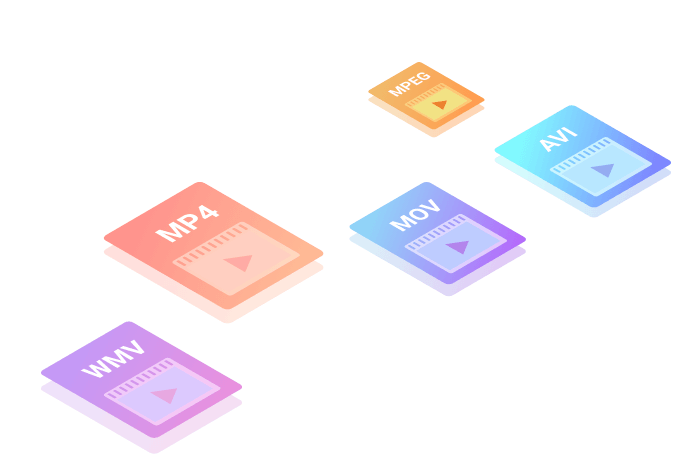
 1000+ formats supported
 30X faster conversion speed
 Up to 8k resolution supported
 100% quality preserved


Music Lovers
Who doesn't love music? Convert your favorite songs to any format to fit any of your audio devices. Or extract the tunes from a YouTube music video so that you can enjoy the track when you're away from the video platform.
Whether Disney eventually capitulates and releases an official 4K version is almost beside the point. The preservationists have already done the work. They have ensured that in a galaxy of constant updates and reboots, the original vision of that twin sunset on Tatooine remains preserved in amber, waiting for anyone willing to look for it.
This version will feature the 1977 opening crawl (without the "Episode IV: A New Hope" subtitle) and the original practical effects, such as the authentic Mos Eisley entrance and the original Death Star explosion.
"The disappearance of the original negative is arguably the greatest act of cinematic vandalism in modern history," says Mike Verta, a composer and visual effects artist who has become a central figure in the preservation movement. "If you went to the Louvre and found out they had painted over the Mona Lisa with a high-resolution digital print because the artist preferred the way it looked, there would be riots."
The refers to the unaltered theatrical cut that premiered on May 25, 1977, before decades of "Special Edition" modifications. This version is historically significant as the specific film that launched the franchise, yet it has been notoriously difficult to access officially for nearly 30 years. Key Characteristics of the 1977 Cut star wars 1977 original version exclusive
Before 4K77, an archivist named Petr "Harmy" Harmáček created the . This version took the high-definition transfers of the modern Blu-rays and meticulously edited out the CGI changes, replacing them with upscaled footage from LaserDiscs and older broadcasts to reconstruct the 1977 cut. Key Differences: 1977 Original vs. Modern Versions
The 1977 original print opened simply with the title Star Wars . The subtitle Episode IV - A New Hope was not added to the opening crawl until the 1981 theatrical re-release.
To understand the obsession with the 1977 version, one must understand the scale of its disappearance. When Star Wars (retroactively subtitled A New Hope ) was released on May 25, 1977, it was a raw, frenetic explosion of creativity. The special effects were practical, pulled off with mirrors, matte paintings, and camera tricks. The colors were saturated; the aliens were rubber and foam. This version will feature the 1977 opening crawl
To understand why the 1977 version is treated like an exclusive, forbidden artifact, one must look at George Lucas’s philosophy on filmmaking. Lucas frequently expressed frustration with the technological limitations of 1977. The 1997 Special Editions
This release, however, was deeply flawed. The video transfer was not anamorphic, meaning it looked poor on modern widescreen TVs. The audio was compressed, and the source material was a non-anamorphic transfer from the 1993 Laserdiscs, not a new scan of the original film elements. This release did little to satisfy fans and only solidified the original cut's status as an exclusive, neglected masterwork.
The narrative was lean and thrilling. Han Solo was an unambiguous gunslinger who shot the bounty hunter Greedo in cold blood. The Emperor was a mysterious hologram. Jabba the Hutt was only a name mentioned in dialogue. The galaxy felt gritty, lived-in, and wonderfully handmade. This version is historically significant as the specific
Find it. Watch it. And may the Force be with the original.
Starting in 1997 for the film's 20th anniversary, George Lucas began a series of permanent "enhancements." He famously stated that the technology of the 70s didn't allow him to achieve his full vision. While some changes were subtle clean-ups, others—like the insertion of a CGI Jabba the Hutt or the sprawling digital cityscapes of Mos Eisley—fundamentally altered the pacing and aesthetic of the film.
Lucas, never fully satisfied with the film's technical limitations, began altering it almost immediately. After the success of The Empire Strikes Back in 1980, he re-released Star Wars in 1981 with the most significant alteration to date: the opening crawl now bore the subtitle retroactively fitting the original film into his expanding saga.
"Do you think the Special Editions ruined Star Wars, or is the 1977 version just nostalgia? Comment below. And if you want to know how to build a 4K77 drive... check the link in our bio."
A 4K video converter to convert video or audio files to 1000+ formats at 30X faster speed. With advanced conversion technology, it allows you to convert multiple video/audio files in batch with 1:1 or even higher quality.


Whether Disney eventually capitulates and releases an official 4K version is almost beside the point. The preservationists have already done the work. They have ensured that in a galaxy of constant updates and reboots, the original vision of that twin sunset on Tatooine remains preserved in amber, waiting for anyone willing to look for it.
This version will feature the 1977 opening crawl (without the "Episode IV: A New Hope" subtitle) and the original practical effects, such as the authentic Mos Eisley entrance and the original Death Star explosion.
"The disappearance of the original negative is arguably the greatest act of cinematic vandalism in modern history," says Mike Verta, a composer and visual effects artist who has become a central figure in the preservation movement. "If you went to the Louvre and found out they had painted over the Mona Lisa with a high-resolution digital print because the artist preferred the way it looked, there would be riots."
The refers to the unaltered theatrical cut that premiered on May 25, 1977, before decades of "Special Edition" modifications. This version is historically significant as the specific film that launched the franchise, yet it has been notoriously difficult to access officially for nearly 30 years. Key Characteristics of the 1977 Cut
Before 4K77, an archivist named Petr "Harmy" Harmáček created the . This version took the high-definition transfers of the modern Blu-rays and meticulously edited out the CGI changes, replacing them with upscaled footage from LaserDiscs and older broadcasts to reconstruct the 1977 cut. Key Differences: 1977 Original vs. Modern Versions
The 1977 original print opened simply with the title Star Wars . The subtitle Episode IV - A New Hope was not added to the opening crawl until the 1981 theatrical re-release.
To understand the obsession with the 1977 version, one must understand the scale of its disappearance. When Star Wars (retroactively subtitled A New Hope ) was released on May 25, 1977, it was a raw, frenetic explosion of creativity. The special effects were practical, pulled off with mirrors, matte paintings, and camera tricks. The colors were saturated; the aliens were rubber and foam.
To understand why the 1977 version is treated like an exclusive, forbidden artifact, one must look at George Lucas’s philosophy on filmmaking. Lucas frequently expressed frustration with the technological limitations of 1977. The 1997 Special Editions
This release, however, was deeply flawed. The video transfer was not anamorphic, meaning it looked poor on modern widescreen TVs. The audio was compressed, and the source material was a non-anamorphic transfer from the 1993 Laserdiscs, not a new scan of the original film elements. This release did little to satisfy fans and only solidified the original cut's status as an exclusive, neglected masterwork.
The narrative was lean and thrilling. Han Solo was an unambiguous gunslinger who shot the bounty hunter Greedo in cold blood. The Emperor was a mysterious hologram. Jabba the Hutt was only a name mentioned in dialogue. The galaxy felt gritty, lived-in, and wonderfully handmade.
Find it. Watch it. And may the Force be with the original.
Starting in 1997 for the film's 20th anniversary, George Lucas began a series of permanent "enhancements." He famously stated that the technology of the 70s didn't allow him to achieve his full vision. While some changes were subtle clean-ups, others—like the insertion of a CGI Jabba the Hutt or the sprawling digital cityscapes of Mos Eisley—fundamentally altered the pacing and aesthetic of the film.
Lucas, never fully satisfied with the film's technical limitations, began altering it almost immediately. After the success of The Empire Strikes Back in 1980, he re-released Star Wars in 1981 with the most significant alteration to date: the opening crawl now bore the subtitle retroactively fitting the original film into his expanding saga.
"Do you think the Special Editions ruined Star Wars, or is the 1977 version just nostalgia? Comment below. And if you want to know how to build a 4K77 drive... check the link in our bio."
30X Faster
Media Conversion Speed with Flawless Quality
This free video converter makes 8k/5k/4k/HD video conversion a piece of cake. By decoding and encoding videos with advanced conversion technology, it enables flawless video conversion - the converted videos can maintain 1:1 or get higher quality than the original files. In addition, it can also convert multiple video files simultaneously to save your time and efforts.
With GPU acceleration and high-speed conversion available, the video conversion can be 30X faster than usual.
This HD video converter enables you to convert any media to video in HD, 2K and up to 4K resolution with no quality loss.
This media converter can convert multiple videos and audio in bulk. Just add files, set output format and quality, then wait for the conversions to be done.
With a clean and straightforward interface, this YouTube video converter is super easy for anyone to use.
Combine all the selected video and audio clips into a single file to make your fantastic video/audio masterpiece.
Equipped with a built-in player, this video converter enables you to preview your original or converted file anytime.
This media converter can convert 1000+ video and audio files from any devices including cameras, mobile phones, media players, TVs, tablets, etc. Thus, any media lovers can use it to transfer any media to play on any devices or share on any social platforms.
Who doesn't love music? Convert your favorite songs to any format to fit any of your audio devices. Or extract the tunes from a YouTube music video so that you can enjoy the track when you're away from the video platform.
A video producer might handle tons of video footage daily. This tool offers great help for pre-editing. Use it to extract desired audio or sound effects, like rainfall, thunder, gunshot and more from movies and video clips. You can also merge video clips, convert video formats and more.
Fan-made videos are popular. Collect video clips that contain your beloved people or thing and merge & save them to a large video file. Or remix different video clips, music or live show recordings to create a new story that might go viral on social media.
Convert your proud video footage from GoPro, DJI, or other HD cameras to any commonly used video format for further editing, uploading or sharing.
An easy and smart video editing software for anyone to make stunning videos with no editing skills required.
Download video and audio files from over 1000 websites for offline watching or listening.


 EaseUS Video Editor
 EaseUS Video Downloader